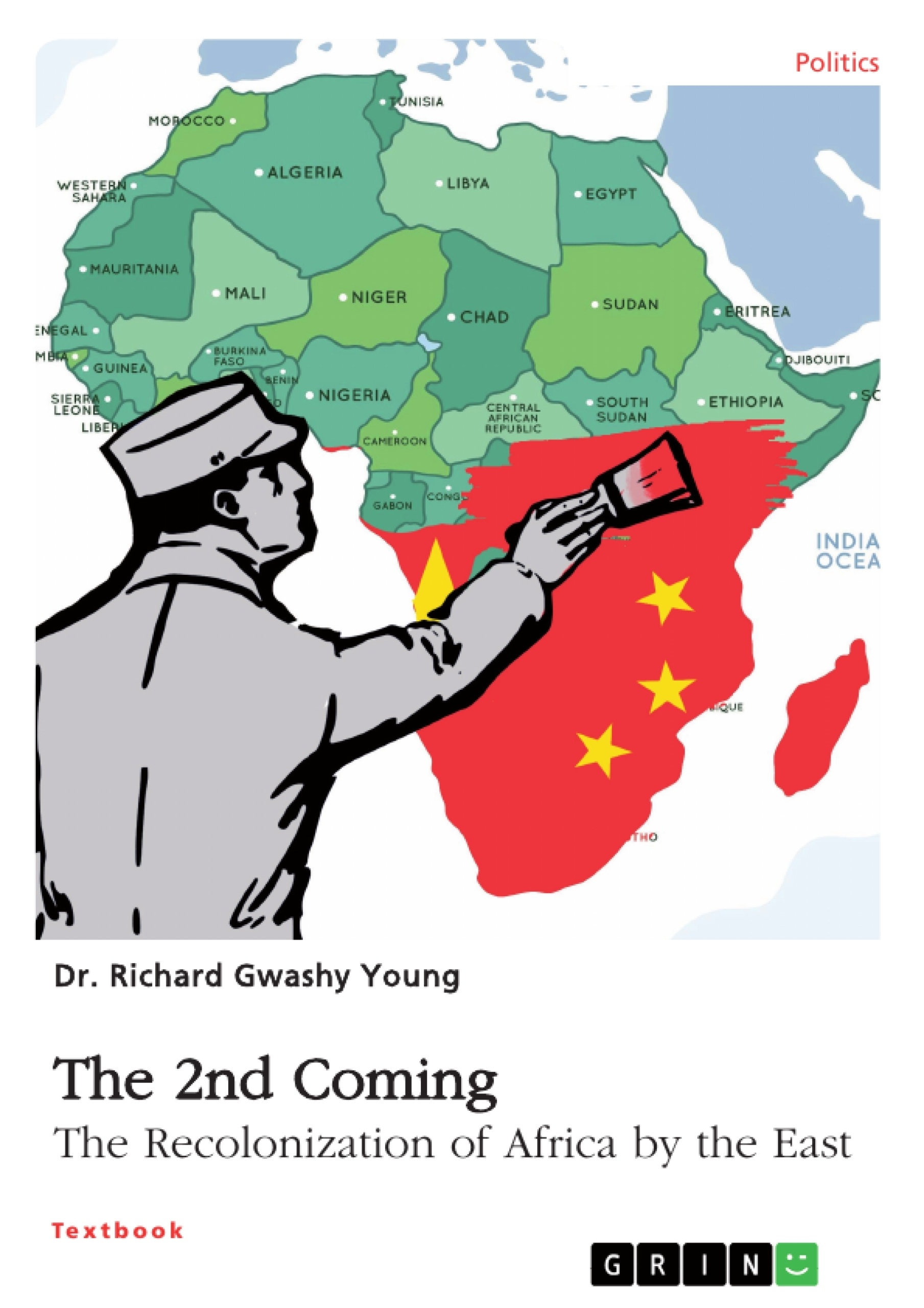
It is without dispute that Africa is rich in diverse non-renewable natural resources and has a large market share for the production of various minerals. Over the years, corruption practices have festered in various institutions within Africa. Although different challenges have contributed to the collapse of the African economy, appropriate reforms can be developed. The expansion of the economic influence of China in Africa has given the Chinese government a comparative advantage in its bilateral trade with African countries. The continuous increase in the role of the Chinese government in African countries has been fostered by the political rulers in the continent.
But what are the risks of the Chinese impact on Africa? Does Africa really profit? How can the African institutions work more effectively? Can the Chinese actions be interpreted as a recolonization of Africa? For some African nations, a partnership with China is irresistible because of the significant and urgent need for infrastructure, which China is willing to finance with relaxed but punitive and exorbitant repayment terms. Dr. Richard Young analyses the Chinese impact and its goals to assess the consequences for the African continent. He explains the problems of earlier colonization and connects them to mistakes being made in the present. The author gives practical advice how to deal with the situation and how to improve Africa’s institutional for more effectiveness.
Table of Contents
The Natural Resources in Africa
Energy Minerals
Metallic Minerals
Non-metallic/Industrial Minerals
The Colonization of Africa
The Berlin Conference of 1884-1885
The impacts of the Berlin conference
Factors that Contributed to the Colonization of Africa
Strategies Employed towards the Colonization of Africa
The Impacts of the Colonization of Africa
The State of Governance in Africa after the Colonial Era
Political Reforms in Africa
Economic Reforms
Educational Reforms
Sanctions in Africa: A Case Study of Zimbabwe and Sudan
Literacy and Education in Africa
The History of Education in Africa
The influence of Islamic teachings
The influence of Christian missionaries
The influence of the colonial powers
The influence of independence
Recommended Ways to Improve Literacy and Education in Africa
Corruption and Governance in Africa
Internal Dimensions to Corruption in African Countries
The External Dimensions to Corruption in African Countries
Challenges to the Elimination of Corruption in African Countries
Internal challenges to eliminating corruption in African countries
External challenges to the elimination of corruption in African countries
Recommended Ways to Address the Internal Dimensions to Corruption in Africa
Recommended Ways to Address the External Dimensions to Corruption in Africa
China’s Strategy to Take Over Africa
The Role of Africa in China’s Grand Strategy
The Establishment of a Chinese World Order
The Influence of the Chinese Government in Africa
Party-to-party training and engagements
Violation of the non-interference principle
Export of the tools of techno-authoritarianism
The provision of instruments of political repression to African countries
China shapes Africa’s media landscape
Securing the diplomatic support of African countries
Other Forms of China’s Subtle Soft Power Push in Africa
Critical Analysis of China-Africa Relations
The elements of neocolonialism and hegemony in China’s strategy to recolonize Africa
The extent to which China-Africa relations contains elements of neocolonialism
Similarities between the 19th-century colonialism and China’s strategy to recolonize Africa
Recommended Ways to Prevent the Recolonization of Africa
Good and Inclusive Governance
Exploring New Sources of Job Creation
The Proper Management of Urban Systems
Regional Integration in Africa
Improving the Productivity and Competitiveness of African Countries
The Redesign and Reorganization of the Standards and Institutions of the Labor Market in Africa
The Active Involvement of African Youths in Politics
Conclusion
References
Research Objectives and Core Themes
This work critically analyzes the historical context of African colonization and evaluates how contemporary engagements, specifically China's economic and political strategies, function as a form of modern-day recolonization. It seeks to answer how these external influences impact Africa's path toward true sovereignty, economic independence, and stable governance.
- The historical legacy of European colonialism and its lasting impact on African political and economic structures.
- The systemic nature of corruption and its role in hindering development and governance in African states.
- China's comprehensive "Grand Strategy" in Africa, involving trade, infrastructure development, and debt-trap diplomacy.
- The erosion of African sovereignty through techno-authoritarianism, media control, and interference in domestic politics.
- Strategic recommendations for African nations to achieve autonomy through inclusive governance, regional integration, and labor market reform.
Extract from the Book
The Colonization of Africa
In 1870, about 10% of African countries were controlled by Europe (Ocheni & Nwankwo, 2012). These countries include the Cape Colony, which was dominated by the United Kingdom, Mozambique and Angola, held by Portugal, and Algeria, which was controlled by France. The scramble for African countries began during this period, which led to the total domination of 90% of African nations during World War I (Ocheni & Nwankwo, 2012; Harm, 2013; Craven, 2015). Some of the factors that contributed to overseas expansionism in this period include rapid advancements in medicine e.g., drug development, transportation systems like railways and steam navigation, as well as information and communication technologies such as the use of telegraphs (Ocheni & Nwankwo, 2012). The aforementioned advancements enabled European countries to establish trading relationships with the indigenous people in Africa (Dimpka, 2015). The establishment of these relationships created an avenue for the establishment of trading posts along various coasts in Africa.
In the early years of Africa’s colonization, some countries in Europe focused on colonizing uninhabited islands in the continents (Harm, 2013). These islands include the Cape Verde Islands and São Tomé Island. Other countries concerted efforts to establish coastal forts that will serve as trade routes between Asia and Europe. Over time, subsequent European countries used various strategies to colonize the continent during the 1800s to 1900s (Ocheni & Nwankwo, 2012; Craven, 2015). For instance, the previous founder of the International African Society, King Leopold II of Belgium, concerted efforts with Henry Morton Stanley to research and civilize Africa in 1876. In view of this, the stakeholders established the International Congo Society in 1878. However, it was later discovered that the main motive for the establishment of the International Congo Society was to serve as a philanthropic front that will enable Léopold and Stanley to achieve specific imperialistic goals.
Summary of Chapters
The Natural Resources in Africa: This chapter details the continent's immense wealth in energy and metallic minerals, explaining their strategic importance in global trade and their role in attracting foreign extractive industries.
The Colonization of Africa: This section explores the historical timeline of European domination, focusing on the Berlin Conference of 1884-1885 and the strategies used to partition and exploit African territories.
The State of Governance in Africa after the Colonial Era: This chapter analyzes the persistence of underdevelopment in post-colonial Africa, attributing it to a lack of vision among political leaders and the failure of governance systems.
Sanctions in Africa: A Case Study of Zimbabwe and Sudan: An investigation into the mechanisms of economic sanctions and how they have disproportionately affected local populations while being used by elites to justify mismanagement.
Literacy and Education in Africa: This chapter examines the history of educational models in Africa, from indigenous methods to the colonial legacy, and discusses the urgent need for curriculum reform.
Corruption and Governance in Africa: A detailed look at the institutionalized nature of corruption, distinguishing between internal and external dimensions and their devastating impact on public service delivery.
China’s Strategy to Take Over Africa: This chapter explores the "Grand Strategy" of China, focusing on its infrastructure initiatives, political training programs, and the expansion of its digital and media influence.
Critical Analysis of China-Africa Relations: A deep dive into the neocolonial and hegemonic elements of Chinese involvement, drawing parallels between past European exploitation and modern debt-trap diplomacy.
Recommended Ways to Prevent the Recolonization of Africa: The concluding thematic chapter offers solutions, emphasizing good governance, regional integration, and the empowerment of youth as essential steps for the continent's liberation.
Keywords
Neocolonialism, China-Africa relations, Belt and Road Initiative, debt-trap diplomacy, African governance, corruption, infrastructure development, economic independence, resource exploitation, political reform, techno-authoritarianism, literacy, regional integration, post-colonialism, sovereignty.
Frequently Asked Questions
What is the core focus of this work?
The work focuses on the historical and contemporary processes of foreign domination in Africa, specifically comparing 19th-century European colonialism with the modern-day strategies employed by the Chinese government to gain influence over the continent.
What are the central themes discussed in the text?
Key themes include the exploitation of natural resources, the impact of corruption on governance, the role of education in national development, and the geopolitical strategies used by external powers to maintain control over African economies.
What is the primary objective of this book?
The primary goal is to shed light on how modern "soft power" initiatives and economic investments can function as neocolonial tools, and to provide actionable recommendations for African leaders to regain economic and political sovereignty.
Which scientific approach does the author use?
The author employs a critical analytical approach, relying on a review of existing academic literature, case studies of specific nations like Zimbabwe and Sudan, and an examination of international relations and geopolitical theories to construct its argument.
What topics are covered in the main section of the book?
The main part of the book addresses the structural weaknesses in African governance, the misuse of development aid, the influence of China on media and internet infrastructure, and the systemic challenges involved in reforming education and labor sectors.
What are the primary characteristics that define this work?
The book is defined by its focus on the "Second Coming" of colonization, its critique of the "Belt and Road Initiative," and its call for radical economic reform and youth involvement in politics to secure the future of the continent.
How does the author characterize China's investment in African infrastructure?
The author characterizes these investments, such as the "10,000 Villages" program and various transport projects, as being part of a soft-power strategy designed to secure debt-trap leverage and long-term control over critical resources rather than being solely for local development.
What role does corruption play in the continent's development, according to the author?
According to the text, corruption is an endemic, institutionalized issue that serves as a tool for ruling elites to protect their personal interests while facilitating the extraction of wealth by foreign entities, ultimately driving the underdevelopment of the region.
- Citar trabajo
- Dr. Richard Young (Autor), 2021, The 2nd Coming. The Recolonization of Africa by the East, Múnich, GRIN Verlag, https://www.grin.com/document/1126249