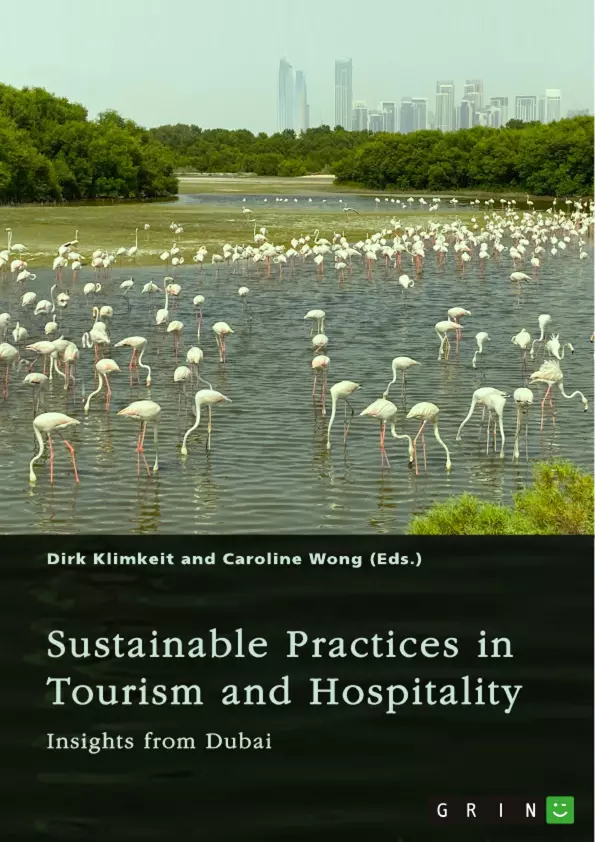
Tourism offers many benefits, both to the destinations and local communities as well as to the tourists themselves. However, it can also have many detrimental effects, especially for the natural environment regarding loss of biodiversity, pollution and as a major contributor to greenhouse gas emissions. Therefore, there is an increasing awareness among policymakers, players in the tourism and hospitality industry and tourists that more sustainable practices are required to ensure the long-term viability of tourism. This book takes a managerial perspective to outline how various functions of business in tourism and hospitality can contribute to a more sustainable tourism. Drawing on a study tour to Dubai, each chapter illustrates the various functional perspectives with good practices encountered in Dubai and offers recommendations for practice.
Contents
1 Introduction
2 Strategies in Entrepreneurship and Intrapreneurship: Introducing Sustainable Offers
3 Integration of Technology and Sustainability within Entrepreneurial and Intrapreneurial Efforts: The Case of Dubai
4 Sustainable Entrepreneurship in Dubai: Integrating Tradition, Innovation, and Environmental Stewardship
5 Education for Sustainability in Selected Hospitality and Tourism Businesses in Dubai
6 Creating Employment for Local Communities
7 Global Talent Management in Dubai's Hospitality and Tourism Industry: Balancing Global Integration and Local Sustainability
8 Transportation and Logistics: Reducing Energy Consumption and CO2 Emissions
9 Community Involvement and Stakeholder Engagement
10 Deriving Business Benefits from CSR
11 Sustainable Tourism in Dubai: Strategic Leadership, Government Initiatives, and Targeted Marketing
Objectives and Topics
This edited volume aims to analyze how businesses within the tourism and hospitality industry can implement sustainable practices from a managerial perspective. It investigates the integration of sustainability across core corporate functions and highlights specific initiatives taken by organizations in Dubai to address economic, environmental, and social challenges.
- Strategic approaches to entrepreneurship and intrapreneurship in the tourism sector.
- The intersection of innovative technology and sustainable operations.
- Methods for integrating local talent and community engagement.
- The business benefits and strategic value of Corporate Social Responsibility (CSR).
Auszug aus dem Buch
1.1 Sustainable Practices in Tourism and Hospitality
Tourism offers many benefits, both to the destinations and local communities as well as to the tourists themselves. It creates income, employment, and government revenues (Vanhove, 1993). It can lead to infrastructure development, urban regeneration (Kotze, 2006), and rural development (Liu et al., 2023). For the tourist, it can provide personal development through interaction with different contexts and people of different backgrounds (Alexander et al., 2010) and thereby reduce prejudices.
However, the benefits of tourism are often unequally distributed between local communities and other stakeholders and within local communities (He et al., 2008). Tourism can also have many detrimental effects, especially on the natural environment, regarding loss of biodiversity, pollution, and as a major contributor to increasing greenhouse gas emissions (Bruyn et al., 2023) and generation of waste (Niñerola et al., 2019). In some destinations, the influx of tourists leads to what has come to be called “overtourism”, ensuing discomfort among local residents due to overcrowding (Hristov et al., 2021), rising real estate prices and rents (Szromek et al., 2020) and an increase in crime rates (Recher & Rubil, 2020).
Summary of Chapters
1 Introduction: Provides a comprehensive overview of the sustainability challenges in the tourism and hospitality industry and introduces the managerial focus of the volume.
2 Strategies in Entrepreneurship and Intrapreneurship: Introducing Sustainable Offers: Examines how both independent entrepreneurs and internal company managers drive sustainability through innovative service offerings and business models.
3 Integration of Technology and Sustainability within Entrepreneurial and Intrapreneurial Efforts: The Case of Dubai: Explores the transformative potential of advanced technologies in achieving Dubai's sustainability goals.
4 Sustainable Entrepreneurship in Dubai: Integrating Tradition, Innovation, and Environmental Stewardship: Analyzes how local ventures balance traditional heritage with modern innovation to promote environmental stewardship.
5 Education for Sustainability in Selected Hospitality and Tourism Businesses in Dubai: Discusses the curriculum and teaching methods necessary to train staff effectively in sustainable practices.
6 Creating Employment for Local Communities: Investigates the challenges of integrating local labor into the tourism sector and the strategies used to promote this integration.
7 Global Talent Management in Dubai's Hospitality and Tourism Industry: Balancing Global Integration and Local Sustainability: Focuses on the complexities of attracting and retaining international talent while supporting the development of the local workforce.
8 Transportation and Logistics: Reducing Energy Consumption and CO2 Emissions: Details how hospitality businesses optimize supply chains and transportation to minimize their environmental footprint.
9 Community Involvement and Stakeholder Engagement: Addresses the necessity of building sustainable relationships with local communities and stakeholders to ensure long-term business success.
10 Deriving Business Benefits from CSR: Analyzes how corporate social responsibility can lead to tangible business benefits, such as increased customer loyalty and improved brand reputation.
11 Sustainable Tourism in Dubai: Strategic Leadership, Government Initiatives, and Targeted Marketing: Reviews the city's strategic approach to positioning itself as a leader in sustainable tourism through public-private partnerships.
Keywords
Sustainable Tourism, Hospitality Industry, Dubai, Entrepreneurship, Intrapreneurship, Corporate Social Responsibility, CSR, Environmental Stewardship, Talent Management, Local Community, Stakeholder Engagement, Technology, Sustainable Development Goals, SDGs, Strategic Leadership.
Frequently Asked Questions
What is the primary focus of this book?
The book provides a managerial perspective on how businesses in the tourism and hospitality industry can implement and benefit from sustainable practices, specifically using Dubai as a primary case study.
What are the central thematic areas covered?
The chapters cover strategy, talent management, the integration of technology, CSR, and stakeholder engagement within the context of sustainable tourism.
What is the main objective of the research presented?
The objective is to analyze the interplay between sustainable development and business operations, identifying how companies can foster innovation while reducing their environmental impact and supporting local communities.
Which scientific methods were used in the research?
The research is based on a mix of literature reviews and primary empirical data collected during a one-week study tour in Dubai, including site visits, expert interviews, and observation of various tourism-related businesses.
What topics are discussed in the main part of the book?
The book discusses practical applications of sustainable entrepreneurship, the role of HR in promoting green jobs, the use of AI and IoT in operations, and how marketing can align a business with international sustainability trends.
Which keywords characterize the work?
Key terms include Sustainable Tourism, Corporate Social Responsibility (CSR), Dubai, Entrepreneurship, Intrapreneurship, and Stakeholder Engagement.
How does the book address the role of local labor in Dubai?
The book examines the Emiratisation policy, analyzing how businesses can integrate local Emiratis into their private sector workforce to foster a more balanced and sustainable labor market.
How does the research analyze the impact of technology on sustainability?
It explores how technologies like AI and IoT help monitor and manage resource consumption, such as tracking food waste and optimizing energy usage in hotels.
What conclusion is drawn regarding CSR?
The book concludes that CSR, when strategically integrated into corporate operations, significantly enhances competitiveness, brand reputation, and long-term financial performance.
- Citation du texte
- Dirk Klimkeit (Éditeur), Caroline Wong (Éditeur), 2024, Sustainable Practices in Tourism and Hospitality, Munich, GRIN Verlag, https://www.grin.com/document/1504071