Biography
Diamond Johnny, also known as Eagle Woman, is a Native American scholar of Cherokee descent from the United States and a third-generation land and water protector. She is a globally recognized human rights researcher and advocate whose work bridges academic scholarship, Indigenous legal traditions, and real-world policy impact.
In 2025, Diamond received three distinct international honors, each recognizing a different dimension of her work:
She was awarded the Research Excellence Distinction Award at the 24th Edition of the International Academic Achievements and Awards (ACH 2025), recognizing outstanding academic achievement, scholarly rigor, and excellence in research production.
She was also recognized by the ISSN International Research Awards 2025, an international academic distinction acknowledging the global relevance, originality, and contribution of her research to contemporary scholarly discourse.
Separately and independently, Diamond was awarded a 2025 Global Recognition Award in Human Rights by the Global Recognition Awards. This honor recognizes exceptional contributions to human rights research and advocacy, following a comprehensive evaluation using the Rasch model measurement system, in which she achieved exceptional ratings across leadership, service, research, innovation, and mentoring. The award specifically recognizes her world-class ability to translate rigorous human rights research into measurable community impact and systemic change for marginalized populations worldwide.
Her human rights work includes collaboration with Amnesty International, submissions to United Nations mechanisms on Indigenous rights, and policy briefs addressing the treatment of asylum seekers—particularly children—at the U.S. border. Her research is grounded in dismantling colonial legal frameworks and advancing Indigenous sovereignty, with particular focus on the implementation failures of the United Nations Declaration on the Rights of Indigenous Peoples (UNDRIP).
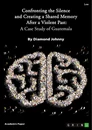
Diamond is also the author of Confronting the Silence and Creating a Shared Memory after a Violent Past: A Case Study of Guatemala, a seminal work examining memory, reconciliation, and justice in post-conflict societies. Her scholarship reflects a broader commitment to ethical research, survivor-centered methodologies, and community-accountable human rights practice.
In 2025, Diamond received three distinct international honors, each recognizing a different dimension of her work:
She was awarded the Research Excellence Distinction Award at the 24th Edition of the International Academic Achievements and Awards (ACH 2025), recognizing outstanding academic achievement, scholarly rigor, and excellence in research production.
She was also recognized by the ISSN International Research Awards 2025, an international academic distinction acknowledging the global relevance, originality, and contribution of her research to contemporary scholarly discourse.
Separately and independently, Diamond was awarded a 2025 Global Recognition Award in Human Rights by the Global Recognition Awards. This honor recognizes exceptional contributions to human rights research and advocacy, following a comprehensive evaluation using the Rasch model measurement system, in which she achieved exceptional ratings across leadership, service, research, innovation, and mentoring. The award specifically recognizes her world-class ability to translate rigorous human rights research into measurable community impact and systemic change for marginalized populations worldwide.
Her human rights work includes collaboration with Amnesty International, submissions to United Nations mechanisms on Indigenous rights, and policy briefs addressing the treatment of asylum seekers—particularly children—at the U.S. border. Her research is grounded in dismantling colonial legal frameworks and advancing Indigenous sovereignty, with particular focus on the implementation failures of the United Nations Declaration on the Rights of Indigenous Peoples (UNDRIP).
Diamond is also the author of Confronting the Silence and Creating a Shared Memory after a Violent Past: A Case Study of Guatemala, a seminal work examining memory, reconciliation, and justice in post-conflict societies. Her scholarship reflects a broader commitment to ethical research, survivor-centered methodologies, and community-accountable human rights practice.
About Me
Diamond Johnny, also known as Eagle Woman, is a Native American scholar of Cherokee descent from the United States and a third-generation land and water protector. She is a globally recognized human rights researcher and
Info
- Profession
- SCHOLAR
- Created on
- 3/23/2022