Biography
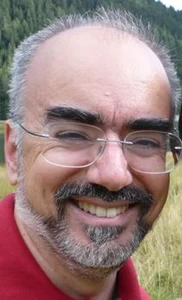
Massimo Di Gesu (1970)*
Di Gesu studied composition with Bruno Bettinelli, and piano with Jole Mantegazza, Anita Porrini (pupil of Cortot and Benedetti Michelangeli), and Valerio Premuroso.
In his work, meaning stems from what he calls the "principle of necessity",** i.e. a musical syntax vital insofar as every element is perceptible as reciprocally necessary.*** This is the principle which imbues his research in both music and poetry.****
Artistic collaborators of Di Gesu include Quartetto d'archi della Scala (Teatro alla Scala, Serate Musicali di Milano), Peter Bradley-Fulgoni (St Martin-in-the-Fields - London, Salle Cortot - Paris, Skrjabin Museum and Richter Memorial Apartment – Moscow), Wiener Virtuosen (soloists of the Wiener Philharmoniker), Maurizio Simeoli, Ensemble Strumentale Scaligero (soloists of the Orchestra Filarmonica della Scala), Trio Dansi (Bocconi University, Radio3RAI), Mariangela Vacatello (Weill Recital Hall/Carnegie Hall - New York), Duo Favalessa-Semeraro (Società Filarmonica di Trento), Arcturus Trio, Virtuosi Italiani.
Four of his poems were published in the Journal of Italian Translation (Vol. XXI, No. 1, Spring 2026, pp. 74), edited by Luigi Bonaffini, Professor Emeritus at Brooklyn College, City University of New York.****
Selected critical comments:
Quartetto d'archi della Scala: «His masterful craft is the achievement of a deep aesthetic vocation and rigorous research discipline»
Allan Atlas: «… it is music that BREATHES»
Flavio Emilio Scogna: «At first, his musical thought could be traced back to the expressionism of Schönberg and the mastery of Berg. Actually, what is here perceptible is the mighty shadow of J. S. Bach»
Peter Bradley-Fulgoni: «Di Gesu's music stands out in the doldrums of our present musical and cultural malaise»
Quirino Principe (review of the premiere of "Verdigo" for string quartet at the Teatro alla Scala): «His work impressed the audience, even the youngest members of it, who are seldom used to "strong" music (which in this case, due to its emotional dramatic contrasts, was of the strongest). I was particularly compelled by the middle movement, which surely succeeded in the artist’s stated aim: to fascinate»
E-mail: skrijabin@yahoo.com
* https://massimodigesu.com/
** https://en.wikipedia.org/wiki/Massimo_Di_Gesu
*** https://rae.arts.ro/filecase/filetypes/documents/archive/rae27/rae_2024_0018.pdf
**** https://www.academia.edu/170602293/Journal_of_Italian_Translation_Vol_XXI_No_1_Spring_2026
Di Gesu studied composition with Bruno Bettinelli, and piano with Jole Mantegazza, Anita Porrini (pupil of Cortot and Benedetti Michelangeli), and Valerio Premuroso.
In his work, meaning stems from what he calls the "principle of necessity",** i.e. a musical syntax vital insofar as every element is perceptible as reciprocally necessary.*** This is the principle which imbues his research in both music and poetry.****
Artistic collaborators of Di Gesu include Quartetto d'archi della Scala (Teatro alla Scala, Serate Musicali di Milano), Peter Bradley-Fulgoni (St Martin-in-the-Fields - London, Salle Cortot - Paris, Skrjabin Museum and Richter Memorial Apartment – Moscow), Wiener Virtuosen (soloists of the Wiener Philharmoniker), Maurizio Simeoli, Ensemble Strumentale Scaligero (soloists of the Orchestra Filarmonica della Scala), Trio Dansi (Bocconi University, Radio3RAI), Mariangela Vacatello (Weill Recital Hall/Carnegie Hall - New York), Duo Favalessa-Semeraro (Società Filarmonica di Trento), Arcturus Trio, Virtuosi Italiani.
Four of his poems were published in the Journal of Italian Translation (Vol. XXI, No. 1, Spring 2026, pp. 74), edited by Luigi Bonaffini, Professor Emeritus at Brooklyn College, City University of New York.****
Selected critical comments:
Quartetto d'archi della Scala: «His masterful craft is the achievement of a deep aesthetic vocation and rigorous research discipline»
Allan Atlas: «… it is music that BREATHES»
Flavio Emilio Scogna: «At first, his musical thought could be traced back to the expressionism of Schönberg and the mastery of Berg. Actually, what is here perceptible is the mighty shadow of J. S. Bach»
Peter Bradley-Fulgoni: «Di Gesu's music stands out in the doldrums of our present musical and cultural malaise»
Quirino Principe (review of the premiere of "Verdigo" for string quartet at the Teatro alla Scala): «His work impressed the audience, even the youngest members of it, who are seldom used to "strong" music (which in this case, due to its emotional dramatic contrasts, was of the strongest). I was particularly compelled by the middle movement, which surely succeeded in the artist’s stated aim: to fascinate»
E-mail: skrijabin@yahoo.com
* https://massimodigesu.com/
** https://en.wikipedia.org/wiki/Massimo_Di_Gesu
*** https://rae.arts.ro/filecase/filetypes/documents/archive/rae27/rae_2024_0018.pdf
**** https://www.academia.edu/170602293/Journal_of_Italian_Translation_Vol_XXI_No_1_Spring_2026
About Me
Info
- Profession
- FREELANCER
- Created on
- 6/17/2009
- Website
- https://massimodigesu.com/
- Career Network (e.g. LinkedIn)
- https://www.youtube.com/playlist?list=PLE8E4FAA93F2526E4
- I have to offer
- composition , solo , chamber , symphony , poetry