Zum Warenkorb
Zum Warenkorb
Welcome to GRINspiration, the online magazine for self-publishers and aspiring authors! From academic papers to fantasy novels: here you'll find tips, tricks, and insights to help you successfully write and publish your work.
You are here: Magazine Tips for perfect smartphone photos
All articles
Tips for perfect smartphone photos, Wissen finden & publizieren, https://www.grin.com
24. April 2024 • Reading duration: 3 Min

Tips for perfect smartphone photos

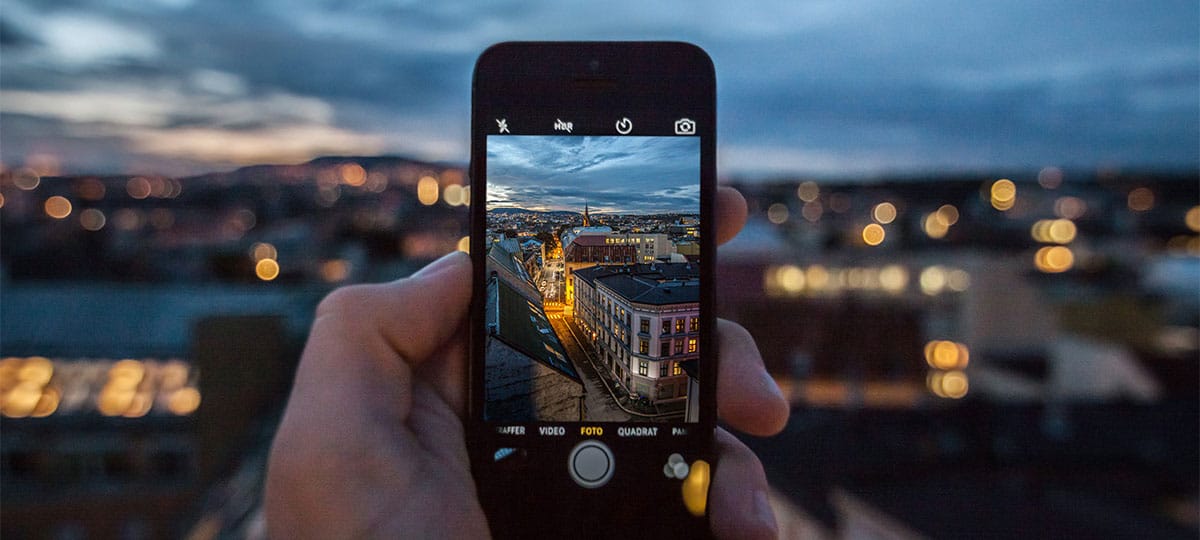
Before smartphones had powerful cameras, you needed a lot of equipment and professional knowledge to take really good pictures. Thanks to modern technology, anyone can now take impressive photos with just a bit of know-how. In this article, we’ll show you what to keep in mind and what tools are available to help you out.

What to expect

First things first:

  • Use your (clean) main camera
  • Get familiar with the features of your camera app
  • Pay attention to natural, bright light
  • Find the right perspective

Keep your camera lens clean

Unlike professional camera equipment, our smartphones are exposed to a lot of dirt: crumbly pockets, dusty surfaces, and greasy fingers—all of these can harm or make your unprotected camera lens dirty and cause smudges on your photos. So, remember to gently clean your lens with a microfiber cloth before snapping photos.

Pay attention to lighting

Lighting is everything! Direct, harsh light (like midday sun) causes harsh shadows and overexposure. Too little light makes your photos blurry and too dark. The best lighting is bright but indirect, which gives you soft shadows and adequate exposure. Natural light always looks better than artificial light, so try to take photos outside during the day.

Rules for composition

Rule of Thirds: Your main subject should be in the left or right third of the image, leaving the rest of the space open.

Leading lines: Lines in the image that guide the viewer’s eye through the picture. They should lead to a specific point, like a fence, a path, or train tracks.

Natural frames: Use windows, arches, or other elements to frame your subject.

The Golden Ratio: Composing your photo according to the Golden Ratio is said to create a particularly harmonious effect, as this pattern often appears in nature. Some camera apps can overlay your viewfinder with a grid to help you follow this rule.

Finding the right perspective

Perspective changes everything: Experiment with your camera to find the best angle for each subject. Want to make something look broader and more imposing? Shoot from below. Want it to look slimmer? Angle the camera upwards. Avoid shooting from straight on—a slight angle is usually more effective and flattering.

Use the main camera

Unlike the front camera, your smartphone’s main camera has better resolution and autofocus. While the front camera is great for selfies, it can’t match the quality of the main camera!

Get familiar with app tools

Our phones not only have high-quality cameras but also offer a lot of tools in their photo apps to help you take great shots. Use portrait mode to simulate depth of field or sport mode for moving objects. HDR mode helps balance very bright and very dark areas (like sunsets). Some phones even let you overlay a grid for better composition while you’re shooting. In your camera app’s pro mode, you can manually adjust settings like exposure time, ISO, and focus.

Tip: When you tap on your subject on the screen, your smartphone automatically adjusts brightness and focus!

Editing

You’ve captured the perfect moment, but a few details are still bugging you? No worries—editing can fix a lot, even without advanced Photoshop skills! Find the right image section for your shot and crop the image accordingly. This can help you achieve a balanced composition even after the fact. If your photos are too bright or too dark, you can adjust the brightness afterward. Increasing contrast can also make slightly blurry images appear sharper.

Mistakes to avoid

  • Blurry photos: Keep your phone steady to avoid blurry shots. Use a stable surface or tripod if needed.
  • Insufficient light: Avoid taking photos in poorly lit environments, as this can result in grainy or blurry images. Look for well-lit areas or add extra light if necessary.
  • Incorrect focus: Ensure your photos are sharp by setting the focus correctly. Tap on the main subject on the screen to focus on it.
  • Zooming instead of moving closer: Avoid using digital zoom, as it can reduce image quality. Physically move closer to your subject instead.
  • Ignoring the background: Pay attention to the background of your photos to avoid distractions or unwanted elements. Try to choose a neutral or fitting background.

Do you like our magazine?
Then sign up for our newsletter now!
Softcover oder Hardcover

Du hast die Wahl: Entscheide dich für einen klassischen Softcover- oder für einen hochwertigen Hardcover-Einband. Wir haben dir die Vor- und Nachteile zusammengestellt:


Softcover

Hardcover

Herstellungs­kosten

günstiger als Hardcover, attraktiverer Verkaufspreis möglich

höhere Produktionskosten, dadurch höherer Verkaufspreis

Format

leichter, passt besser in deine Tasche, angenehmer für unterwegs

schwerer und unhandlicher, dadurch weniger geeignet für Reisen und fürs „nebenbei lesen“

Wertigkeit

wirkt weniger hochwertig, weniger guter Blickfang als Hardcover

hochwertiger Eindruck, bessere Geschenk- und Sammler-Tauglichkeit; wirkt prestigeträchtiger

Stabilität

Ecken knicken schneller und der Buchrücken kann eher brechen

stabiler Einband, bessere Formstabilität und Schutz der Seiten

Layout check

We check your text for readability and printability (Are the margins sufficient for printing? Is the font size easy to read in print? Is the line spacing right? Is the resolution of the illustrations sufficient for good print quality?), embed the fonts if necessary and take care of automatic page numbers and a table of contents.

Publication as e-book and ISBN

With each publication, you will receive an ISBN number for your e-book and print book.

Worldwide distribution

With each publication, you will receive an ISBN number for your e-book and print book. We deliver your book to our worldwide distribution network: over 300 online shops.

Appealing blurb

We will write you a blurb that arouses curiosity and emotions – and convinces readers. Perfectly tailored to your genre and target audience.

Personal contact

Benefit from our many years of publishing experience: We support you with our know-how from upload to finished book. With us, you will get a personal contact person, we will guide you step by step through the entire process and are there for you.

Layout Deluxe

Your book, perfectly staged: With professional typography, stylish book typesetting and design templates that fit your project, we ensure an all-round coherent reading experience. Whether classic or individual – we design your book the way your story deserves it.

Cover Service

Do you already have your own photo or motif or at least a very concrete idea of how you imagine your book cover? Perfect! We will take care of the creation and send you two to four drafts, from which you can choose one.

You don’t have a cover idea yet or would like us to include your author photo on the back of the book? No problem. For an extra charge of €50, our graphic designer will search for motifs and design your individual book cover including an author’s photo on the book cover – creatively, professionally and matching your story.

Need some inspiration? Check out some of our favorite covers!

Fee overview

Each sale of your title will be remunerated according to the following table.

You will receive your royalties on top of the publisher's selling price.
The table has been valid since 17.04.2025, 12.30 p.m.

Fee on e-book sales

www.grin.com 50%

Amazon Kindle, iBook Store, Google Play, Ciando,

Pubbles, Libri, Genios, Other Distributors 30%

Fee on book sales

www.grin.com 50%
Book trade (BoD and Amazon Marketplace) 30%

The publisher's selling price is the sales price excluding the statutory value added tax as well as less trade discounts, production and shipping costs.

Free Word Templates

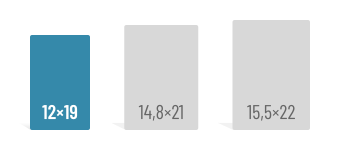
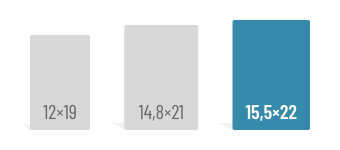
SP_illu_buchformate_01

Format: 12 x 19 cm

ideal for: fiction novels

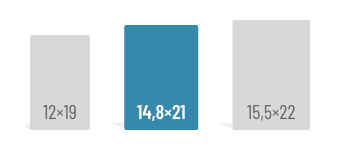
SP_illu_buchformate_02

Format: 14.8 x 21 cm

ideal for: guide books and non-fiction books

SP_illu_buchformate_03

Format: 15.5 x 22 cm

ideal for: children’s and youth books