Prenatal psychology focuses on the development of the unborn child throughout the nine months of pregnancy. Still being a new scientific field of research prenatal psychology remains largely unknown to the public. A lot of professionals who deal with pregnancy and birth on a daily basis are not even aware of the significance of prenatal life. Within this new field the topic of prenatal bonding is the most important one!
BONDING ANALYST and author Christa Balkenhol-Wright wants to change that. In her book B.O.P.S. (Bonding-Oriented Pregnancy Support)‘ she presents a practical concept based on the findings of prenatal psychology mainly aiming at strengthening the prenatal bond between mother and child. In the present interview, she explains why little knowledge exists regarding the significance of prenatal bonding, how the BOPS method works and why prenatal bonding throughout pregnancy is crucial for the unborn baby’s overall emotionally and mentally healthy development.
GRIN: Christa, you emphasize that prenatal psychology is still little known and explain why this knowledge has received so little attention.
I would like to answer your question with a few sentences from an article written by Dr Ludwig Janus, the most eminent authority in Germany in the field of prenatal psychology and my former mentor. The quotation is from his article ‘The psychological dimension in pregnancy’:
“Why is it so difficult for most people to understand that life does not begin after birth? Why are experts not fascinated when explanations for certain issues, such as violent tendencies, fears, etc., can be found in our early prenatal development? Why do experts consider it unrealistic that various traumas can arise prenatally that affect our lives?”
There are two reasons:
- In the general social consciousness, pregnancy is a purely physical matter, and the emotional (psychological) dimension of pregnancy is not an issue.
- Dealing with one’s own pregnancy and birth can trigger feelings of fear, anxiety or discomfort because unconsciously it touches a deep, existential process in us, physically and psychologically. It involves change, responsibility and control. When we get into contact with our own prenatal experiences, unconscious memories might be triggered, which can be frightening.
GRIN: Why is to open up to the significance of prenatal bonding so utterly important for pregnant women, their unborn babies and all professionals who deal with pregnancy and birth?
Pregnant women, their entire families and all professionals involved in pregnancy and birth, such as midwives, doulas, gynecologists, prenatal diagnosticians, obstetricians, etc., would have to completely rethink their dealing with pregnancy and birth. The first step would be to recognize that the unborn baby is a conscious, thinking, feeling, learning, interactive human being who, above all, is capable of bonding which as a matter of fact is crucial for its overall healthy mental and emotional development.
GRIN: You have developed the method of bonding-oriented pregnancy support (BOPS). What exactly does it contain and deal with?
In short, the central element and most important goal of the BOPS method is to promote prenatal bonding. This is achieved by analyzing the entire network of the pregnant woman’s relationships as well as her overall ability to bond and to determine her bonding quality. The BOPS method enables her to improve her bonding capacity and quality by going through a maturation process so that she becomes able to form a unique, deep, affectionate bond with her baby who will profit immensely from its first bonding experience in utero!
GRIN: How did you find Hidas’ and Raffai’s Bonding Analysis method?
All my life I have been interested in psychology because I wanted to know what causes me to suffer, what causes people in general to suffer, and how suffering can be alleviated or even healed. Eventually, I discovered the relatively new field of prenatal psychology, where I finally found satisfactory answers to my many questions which no other field of psychology had been able to provide me with until then. And so, in 2013, I finally discovered prenatal psychology and, in this context, the importance of prenatal life and experience! Finally, I discovered Dr Jenö Raffai‘s book “Prenatal Bonding Analysis. The Invisible Umbilical Cord” about the importance not only of prenatal life in general, but of prenatal bonding in particular.
I contacted Dr. Raffai and organised his last bonding analysis training course in Cologne. Part of the training consisted of self-awareness exercises, in which we – for example – were guided into a deep state of relaxation and sent on an internal journey into our mother’s womb. There and then I discovered that I had not been alone in my mother’s womb; I had had a twin brother who had been miscarried during the first trimester. Raffai explained to us that this experience is extremely traumatic for the surviving twin.
GRIN: And what motivated you to further develop this method?
After becoming a Certified Prenatal Bonding Analyst in 2016, I decided to offer a training course specifically for all professionals dealing with pregnancy and birth such as midwives, doulas, gynecologists, obstetricians, alternative practitioners etc.
Hidas and Raffai were psychoanalysts and of course used a psychoanalytical approach when dealing with pregnant women. Raffai had always emphasized that his bonding analysis was not an analytical psychotherapy. Of course that led me to developing a different, complementary concept that could be suitable for non-psychologists. I added numerous new elements to the bonding analysis method or replaced some of them. Then I finally chose the denomination “B.O.P.S. – Bonding-Oriented Pregnancy Support – in order to clearly distance myself from the classical Bonding Analysis.
GRIN: In your opinion, which professional groups should be particularly informed about the results of prenatal psychology?
Basically, everyone who deals directly with pregnancy and birth, but education should also be provided for example at nursery and primary school level because children quite often re-enact traumas experienced during pregnancy and/or birth process.
GRIN: Are there differences in perception and openness towards this topic between medical professionals and other professional groups such as midwives?
In my experience, midwives are much more open to recognize the importance of prenatal life and experiences in general and especially prenatal bonding, whereas gynecologists are less so open.
GRIN: What does a typical session using the BOPS method look like?
In order to provide optimal support to a pregnant woman using the BOPS method, I work with a detailed questionnaire, which gives me an accurate picture of the pregnant woman’s bonding condition and quality. Let me give you an example: if the pregnant woman refers to her baby as ‘the’ baby and does not say “my” or ‘our’ baby, this means that, for whatever reason (which needs to be determined), she is not really fully committed to the pregnancy. I have a university degree in translation and am therefore skilled in the use of language and the interpretation of expressions, in the sense of: ‘What does the author really mean?’ This is why I call my method ‘linguistic-narrative’; in simpler terms, the pregnant woman talks and I interpret.
The accompaniment with the BOPS method takes place during weekly sessions which I call the “baby session hour”. This also involves guiding the pregnant woman into a state of deep relaxation so that she can establish mental contact with her baby which takes the form of an inner dialogue. I describe how this works in detail in my booklet.
GRIN: You have founded an international academy to promote the method worldwide. How far has it spread?
I founded the academy to offer course participants the opportunity to exchange ideas without the constraints of an association. That led to something quite extraordinary, to my amazement and great joy some course participants offered to translate my booklet into their respective native languages. With the help of the GRIN Publishing House, I have been able to publish my booklet in 11 languages so far: German, English, French, Italian, Spanish, Hungarian, Dutch, Portuguese, Polish, Turkish and Danish. Other languages are underway (Arabic, Greek and Russian).
GRIN: Why did you decide to have published your booklets by GRIN?
A friend told me about GRIN. I had a look at what they are offering. I liked that, it suited me, and I and got in touch straight away. Everything was just right!
GRIN: What advantages do you see in publishing with GRIN?
First of all, I would like to mention the excellent personal support I received. I have always been taken care of by the same employee, and everything has been just perfect. The prizes of the publications are affordable. There are no delays, everything runs smoothly.
GRIN: Thank you very much for taking the time. We wish you every success with your book and your courses!
Comment from a former BOPS course participant:
Learning the BOPS method has opened up new horizons for me and has enormously enriched my professional activity as a midwife. And to my great pleasure I have noticed that more and more pregnant women are looking for midwives who have learnt this method. The course material is presented in a very understandable way and one does not need a degree in psychology to follow the explanations and instructions. The training course is very complex and compact, which makes it possible for us to start applying this method immediately after the end of the course.
Gudrun, midwife
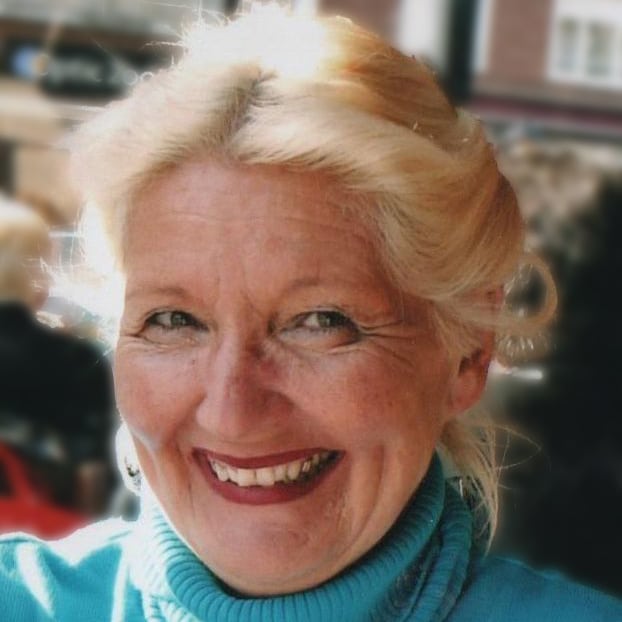

Short biography of the author:
Christa Balkenhol-Wright obtained a diploma in translation from the University of Geneva in Switzerland). She worked for many years in the language and translation service of a German ministry, specialising in psychology, medicine, biotechnology and biomedical engineering.
Since 2002, she has worked as a freelance lecturer at various universities in Cologne, Düsseldorf, Krefeld, Mönchengladbach and at RWTH Aachen University, teaching a wide range of subjects in English and French.
As she had always been keenly interested in psychology instructing herself auto-didactically, she inevitably came across prenatal psychology, which she claims has offered her all answers to questions that no other psychological approach could give her. And that was even more true when she learnt about the existence of Raffai’s Bonding Analysis. She organised and attended Dr Raffai’s last three-year BA training course which he ran together with Dr Ludwig Janus in Cologne. In 2016 she become certified as Prenatal Bonding Analyst. In addition, she was trained in hypnosis and regression techniques.
In 2018, she published a book together with 9 Austrian and German Certified Bonding Analysts describing theory and practice of Bonding Analysis giving illustrative examples of case histories which show how highly effective the Bonding Analysis method is.
Since 2016, she has been accompanying pregnant women with the Bonding Analysis also offering online courses in German, English and French since 2016. She set up her own concept of promoting prenatal bonding naming her concept “B.O.P.S. – Bonding-Oriented Pregnancy Support“ which she described in this booklet.
Her main aim is to train all professionals dealing with pregnancy and birth in the broadest sense, thus creating a global network allowing to spread around the knowledge about the significance of prenatal life and experience .
To this end, she founded the “Academy to Promote Prenatal Attachment” – “A.P.P.A.” and joined the following organizations, all of which are concerned with the importance of prenatal life: ISPPM, BTNH, GAIMH and Prenatal Alliance.
Her website: www.vorgeburtliche-eltern-baby-bindung.net



Do you like our magazine? Then sign up for our GRIN newsletter now!